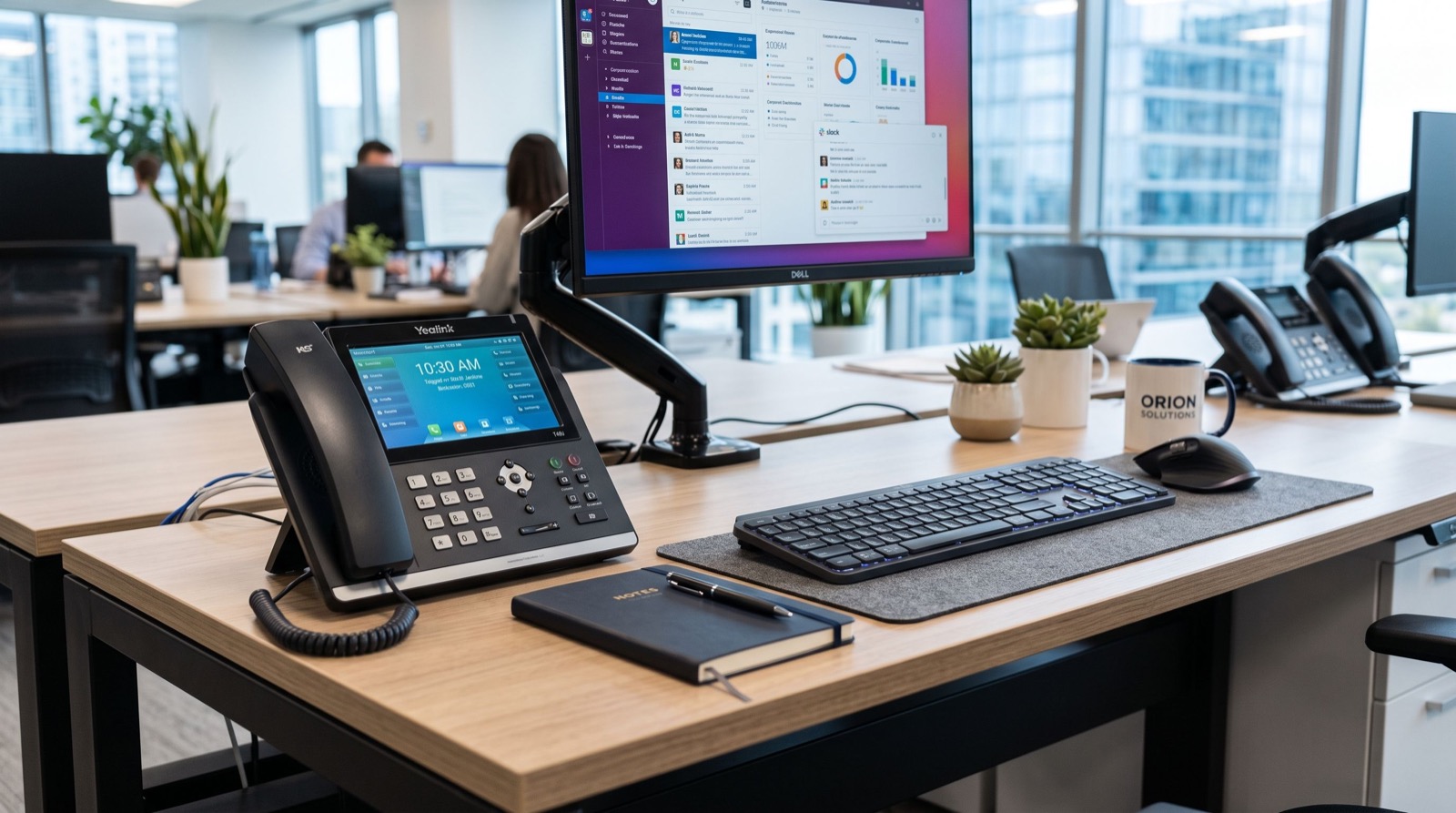
Fanvil V50P Basic Level IP Phone vs V61G: Picking the Right Desk Phone in 2026
Every office has two kinds of users: people who make a handful of calls a day and people who live on the phone. Match the handset to each group and you save money while keeping everyone productive. The Fanvil V50P Basic Level IP Phone covers the first group beautifully, while a flagship model serves the heavy hitters. This 2026 guide shows you how to split your fleet the smart way.
We have deployed mixed Fanvil fleets across Pakistani businesses for years, so the advice below comes from real rollouts, not spec sheets alone.
Understanding the Two Tiers
Fanvil organises its range by workload. Entry-level handsets handle standard calling with rock-solid reliability. Prime handsets add colour screens, more line keys, Gigabit ports, and richer media features for power users.
Both tiers speak open SIP, the signalling standard behind modern Voice over IP. Because they share one platform, you can mix them freely on the same PBX. If you want a plain-language overview of the technology, the Wikipedia VoIP article gives a solid primer.
Where the Fanvil V50P Basic Level IP Phone Fits Best
The V50P targets volume. It gives you clean HD audio, dual Ethernet ports, and programmable keys at a price that scales across dozens of desks.
Reach for it when the role is predictable and call volume is moderate. Typical winners include:
- Support agents who need reliable lines without media extras.
- Warehouse and back-office staff making internal calls.
- Hotel rooms, clinics, and classrooms that need simple dialling.
- Any seat where budget per unit drives the purchase decision.
When to Step Up to the Prime Model
Executives, receptionists, and sales leads often need more screen and more keys. The Fanvil V61G Prime Business Phone answers that demand with a colour display, Gigabit Ethernet, Bluetooth and Wi-Fi options, and a generous bank of DSS keys for monitoring colleagues.
That extra capability pays off for users who transfer calls constantly, run small conferences, or watch a busy switchboard all day.
Side-by-Side Comparison
The table below highlights the differences buyers care about most in 2026.
| Feature | Fanvil V50P (Basic) | Fanvil V61G (Prime) |
|---|---|---|
| Display | Monochrome | Colour |
| Ethernet | Dual 10/100 | Dual Gigabit |
| Wireless | Wired only | Bluetooth and Wi-Fi options |
| Best for | Volume seats | Managers and reception |
| Cost per seat | Lower | Higher |
| SIP standard | Yes | Yes |
How Do You Decide the Right Mix for Your Office?
Start with the work, not the wish list. Follow this simple method to size your order.
- List every role. Group staff by how they actually use the phone.
- Count heavy users. Reception, sales, and support leads usually justify prime units.
- Assign basics everywhere else. Most desks run perfectly on the entry handset.
- Add 10% spares. Keep a small buffer for growth and swaps.
- Standardise accessories. Pick one headset model to simplify support.
A typical 50-seat office lands near 80% basic and 20% prime. That blend keeps the budget tight while giving power users the tools they need.
Revisit the ratio each year as teams grow and roles shift. A support agent promoted to team lead may now warrant a prime unit, while a former manager’s desk can hand its handset down. Treating the fleet as a living plan, rather than a one-time purchase, keeps spending aligned with how people actually work.
Deployment and Support Matter More Than Specs
Great hardware still fails with a sloppy rollout. Provisioning, QoS, and training decide whether staff love or loathe their new phones.
Working with reputable service experts keeps the project on schedule. They bulk-provision firmware, tag voice traffic for quality, and train teams so the first week runs smoothly.
One Original Tip That Saves Money
Here is a lesson from the field: do not buy prime phones for desks that only need BLF monitoring. The basic V50P already supports busy-lamp-field keys. Many buyers overspend on colour screens when a few programmable keys would have done the job. Audit the actual feature need before you upgrade a seat.
Budgeting a Mixed Fleet Without Surprises
A phone project rarely ends at the handsets. Smart budgets account for the whole picture so finance never gets a nasty shock mid-rollout.
Plan for these line items when you cost a mixed basic-and-prime fleet in 2026:
- Handsets split by tier, with your 80/20 ratio as the baseline.
- PoE switches sized to power every phone plus headroom for growth.
- Headsets for agents who take calls all day.
- Provisioning and training time, whether in-house or outsourced.
- Spares at roughly ten percent of the fleet.
Spreading these costs across a three-to-five-year hardware life makes the per-seat figure far more palatable than the upfront total suggests.
Managing Both Tiers From One Dashboard
The real advantage of staying within one vendor’s range is unified management. You provision basic and prime phones from the same server, push firmware to both in a single pass, and apply one security policy across the entire fleet.
That consistency slashes support overhead. Your IT team learns one interface, troubleshoots one platform, and keeps a single set of backups. When a phone fails, a replacement inherits its configuration automatically, so the user is back online in minutes rather than hours. Simplicity like this is exactly why mixed single-vendor fleets scale so smoothly.
Frequently Asked Questions
Can I mix basic and prime Fanvil phones on one system?
Absolutely. Both tiers use the same open SIP standard, so they register with the same PBX and share dial plans, voicemail, and provisioning. Mixing tiers is the recommended way to control costs.
Is the Fanvil V50P Basic Level IP Phone enough for a call centre?
Yes. For most agents the V50P delivers everything they need: HD audio, multiple lines, and transfer and conference features. Reserve prime units for supervisors who monitor the floor.
Do prime phones need special network hardware?
Prime models benefit from Gigabit switches and PoE, but they still run on standard networks. For best performance, plan your switch capacity and power budget before rollout.
How long do Fanvil phones last?
With regular firmware updates and normal office use, a Fanvil handset commonly serves five years or more. That longevity spreads the cost across many productive years.
Conclusion
You do not have to choose one phone for the whole company. Pair the Fanvil V50P Basic Level IP Phone across the majority of desks and reserve prime handsets for the roles that truly need them. That balanced approach keeps your 2026 budget lean, your power users happy, and your communication system reliable from the front desk to the back office.