In the vast ecosystem of logistics and supply chain management, much of the spotlight often falls on cold chain solutions. However, the vast majority of goods—from canned foods and dry goods to electronics, textiles, and construction materials—require a different but equally critical solution: Dry Storage. As Saudi Arabia accelerates toward its Vision 2030 goals, the dry warehousing sector is experiencing a significant transformation, driven by massive industrial investments and a shift toward smart, automated facilities .
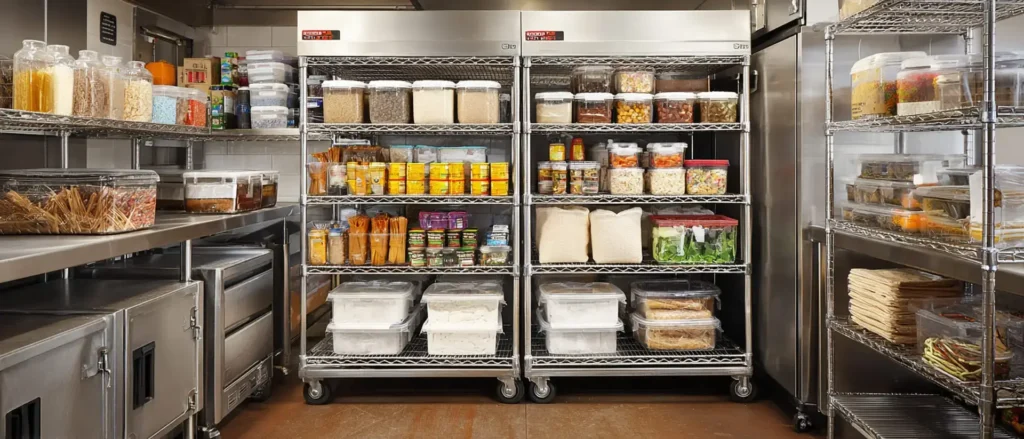
Dry storage refers to warehousing facilities that maintain ambient, controlled conditions to protect goods from extreme heat, dust, and humidity. While these spaces do not actively refrigerate products, they provide essential protections: shelter from the elements, ventilation to prevent condensation, pest control, and structural integrity.
For businesses seeking cost-effective, scalable protection for non-perishable inventory, partnering with a professional, SFDA-compliant provider like Units is not just an expense—it is an investment in product integrity and customer trust.
Dry Storage: The Backbone of a Resilient Supply Chain
The term Dry Storage refers to facilities that maintain a stable ambient environment, typically between 18°C and 25°C, to protect goods from the specific threats of the region. As the Saudi market for warehousing is valued at approximately $7.10 billion in 2024 and is projected to grow at a CAGR of 5.90% through 2034, the shift is moving toward “smart” facilities .
Modern dry warehousing is defined by critical features that go far beyond standard sheds:
- Smart Monitoring (IoT): Sensors provide 24/7 data on temperature and humidity, ensuring stable conditions for sensitive inventory like electronics.
- SFDA Compliance: For businesses handling food or pharmaceutical items, choosing an SFDA-certified facility is not just a best practice—it is a regulatory requirement. The SFDA enforces strict technical standards for dry and canned food storage .
- Program-Controlled Barrier Gates: Enhanced security for high-value industrial and consumer goods.
- Advanced Fire Suppression: State-of-the-art systems to protect assets.
Strategic Market Growth
Saudi Arabia is expected to invest $87.20 billion in various economic projects till 2025, heavily boosting the industrial and logistics sectors . The industrial and logistics sectors are key components of the Kingdom’s Global Supply Chain Resilience Initiative, which aims to attract SAR 40 billion ($10.6 billion) in investments . This growth is driving demand for higher-quality assets.
Dry Storage in Riyadh: The Capital’s Logistics Hub
Riyadh, the capital and commercial heart, is currently the epicenter of the warehousing boom. Rapid population growth and the rise of e-commerce platforms are driving demand for logistics facilities that offer more than just four walls.
Major Infrastructure Developments
In a landmark deal, Arcapita and Flow are developing a new 80,000 square meter mixed-use storage complex in Riyadh . This “Class A” facility represents the new standard for Dry Storage in Riyadh, featuring:
- Dry storage zones: For consumer-packaged goods and industrial parts.
- Temperature-controlled spaces: To handle a wider range of sensitive products.
- Specialized spaces: For pharmaceuticals and hazardous goods—a growing segment in the capital .
The Compliance Imperative in Riyadh
For corporations and SMEs operating in Riyadh, the cost of non-compliance with SFDA regulations can be severe. Industry experts warn of “regulatory penalties: Storing regulated products in a non-compliant facility exposes your company to SFDA enforcement action, including facility shutdowns and import suspension—consequences that dwarf any cost efficiency” .
This has led to a surge in demand for developers who can offer SFDA-licensed dry storage. Corporations need a partner who can produce an SFDA license number for independent verification and maintain auditable temperature logs.
Dry Storage in Saudi Arabia: A National Perspective
Beyond Riyadh, the demand for high-quality Dry Storage in Saudi Arabia is spreading to all major economic hubs, driven by the adoption of Green Warehousing and Smart Warehousing .
National Trends
- Green Warehousing: Facilities are increasingly using skylights to cut electricity consumption and automatic handling equipment to curb emissions.
- Smart Warehousing: IoT sensors for inventory and environmental monitoring, as well as autonomous vehicles (AGVs) to optimize goods transport, are becoming standard .
Key Players in the Saudi Market
The Saudi warehousing market features several established players offering dry storage solutions:
- Almajdouie Logistics: Operates strategically located facilities near major industrial ports, offering dry storage ideal for consumer-packaged goods, automotive parts, and electronics .
- Advanced Storage Co.: A notable competitor in the Grade A warehousing space.
- International Giants: DHL Saudi Arabia and A.P. Moller-Maersk are also active players, driving up standards for safety and technology .
Private vs. Public Warehouses
Private warehouses currently dominate due to superior inventory control, but public (3PL) warehouses are growing, offering cost-effective storage options that help SMEs scale without massive capital investment.
Units: Your Trusted Partner for Dry Storage
In a market defined by strict regulation and rapid expansion, Units stands out as the top company for dry storage solutions in Saudi Arabia. We combine rigorous safety standards with cutting-edge digital accessibility, ensuring your products are stored safely and managed intelligently.
Why Choose Units?
- SFDA-Certified Facilities: Compliance is non-negotiable. Units’ ambient warehouses are certified by the Saudi Food & Drug Authority, ensuring your products meet the highest regulatory standards for safety and hygiene .
- Engineered for the Local Climate: Our facilities feature optimized ventilation systems to prevent moisture buildup and filter out dust, protecting sensitive goods from degradation. We maintain ambient temperatures strictly between 18°C and 25°C.
- 24/7 Digital Accessibility: With Units, you are never in the dark. Our user-friendly online platform provides 24/7 access to your inventory levels, allowing you to manage inbound/outbound logistics, conduct virtual audits, and generate reports instantly from anywhere.
- Flexible and Scalable Contracts: Whether you are a small business needing space for a month or a large enterprise requiring a long-term hub, Units offers tailor-made contracts. Scale your capacity as you grow without rigid lock-ins.
- Comprehensive Security: Your inventory is monitored around the clock. Units facilities feature 24/7 security surveillance, acoustic picket fences, and strict access control to prevent unauthorized entry.
Don’t let the elements compromise your inventory. In a market driven by speed and efficiency, the safety of your products starts with the quality of your dry storage. Visit units.sa to schedule a facility tour or request a quote today.
Conclusion
The logistics real estate market in Saudi Arabia is undergoing a historic transformation. As industrial production rises and e-commerce flourishes, the need for secure, tech-enabled Dry Storage is no longer optional—it is essential.
In Riyadh, mega-hubs are setting new standards for dry warehousing, with SFDA compliance and Class A specifications becoming the baseline for quality logistics. Across Saudi Arabia, the adoption of smart technologies and green initiatives is redefining the supply chain landscape.
With Units, you get more than just space; you get an integrated logistics partner with smart monitoring, 24/7 digital access, SFDA certification, and absolute regulatory compliance. Visit units.sa today and discover the future of warehousing.
Frequently Asked Questions (FAQs)
1. Is SFDA certification required for dry warehouses in Saudi Arabia?
Yes. If you are storing food products, cosmetics, or pharmaceutical items, using an SFDA-certified facility is often a legal requirement. The SFDA recently issued draft technical regulations specifically for “Dry and Canned Food Storage Facilities,” mandating strict temperature and hygiene controls .
2. How is technology changing dry warehousing in Riyadh?
Modern dry warehouses are moving away from simple sheds toward “Smart Warehousing.” This involves using IoT sensors for real-time monitoring of inventory and environmental conditions (humidity/dust) and automated guided vehicles (AGVs) to streamline picking and put-away .
3. Can I store food products in a dry warehouse?
Yes, specifically dry and canned food goods (like rice, spices, and canned vegetables) are ideal for dry storage. However, these facilities must be SFDA-approved to ensure compliance with health standards regarding pest control and temperature .
4. What is the current market size for warehousing in Saudi Arabia?
The Saudi Arabia warehousing and storage market was valued at approximately USD 7.10 billion in 2024 and is projected to hit USD 12.60 billion by 2034, growing at a CAGR of 5.90% .
5. Where are the best locations for Dry Storage in Riyadh?
Prime locations are typically near major logistics corridors such as the new Riyadh Logistics Hub being developed by Arcapita and Flow . Areas near King Khalid International Airport and major industrial zones are highly sought after for their proximity to transportation networks.